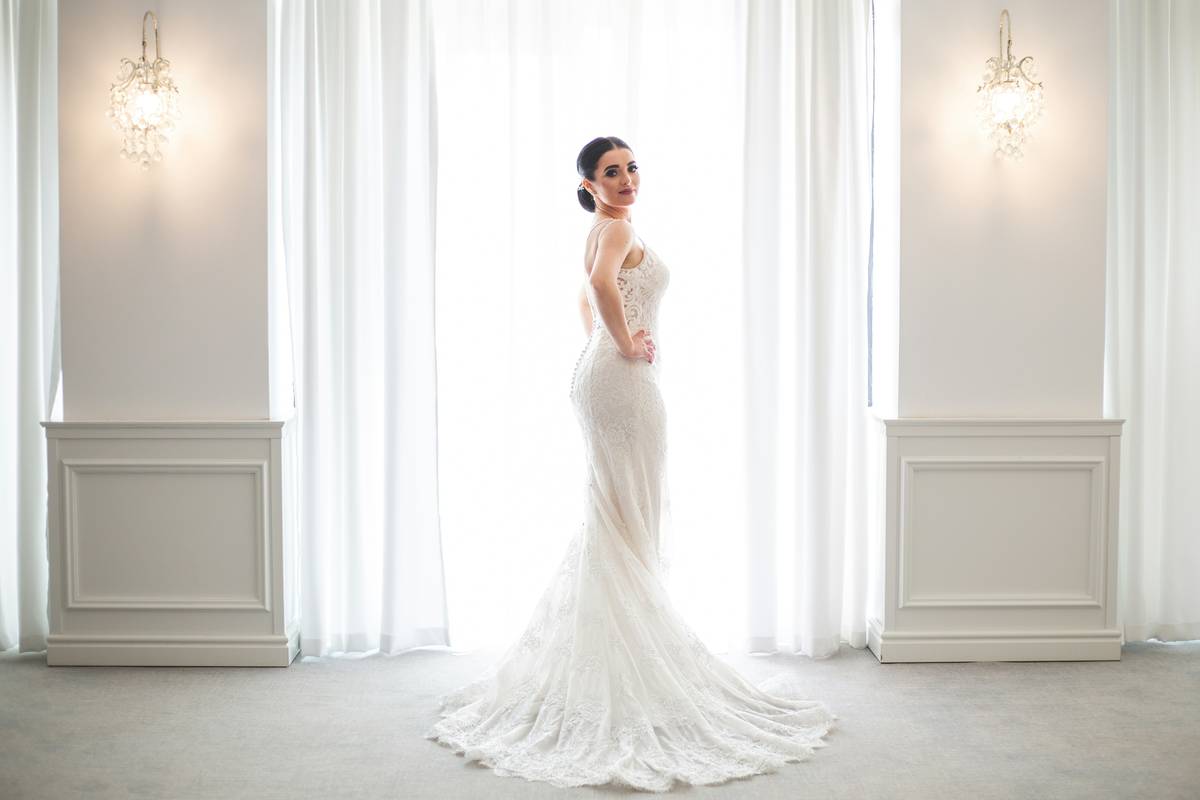
Have you ever watched a bride walk down the aisle—only to see her elegant light wedding dress swallowed by harsh overhead spots, or worse, turned translucent under unflattering LEDs? I’ve been there. Last spring, I oversaw lighting for a vineyard wedding where we used cool-white 5000K track lights—thinking “bright = crisp.” Instead, the bride’s ivory Chantilly lace looked washed out, the delicate beading vanished, and her veil glowed like a fluorescent sign. We scrambled to dimmers and gels mid-ceremony. That mistake cost us 42 minutes of prep—and one very patient bride.
If you’re planning lighting for a ceremony or reception where an elegant light wedding dress takes center stage, this isn’t about aesthetics alone. It’s physics, psychology, and precision. Lighting doesn’t just illuminate—it sculpts perception. Softness is not optional; it’s non-negotiable. In home improvement’s lighting & lighting fixtures niche, wedding lighting sits at the high-stakes intersection of emotional resonance and technical execution. This guide walks you through what actually works—backed by real install data, optical principles, and hard-won lessons.
Table of Contents
- Why Elegant Light Wedding Dress Lighting Is a Home Improvement Challenge
- Your Step-by-Step Lighting Setup Guide
- 6 Non-Negotiable Best Practices (No Fluff)
- Real Results: How Soft Light Transformed Three Weddings
- Frequently Asked Questions
Key Takeaways
- Lighting for an elegant light wedding dress prioritizes light quality over quantity—Color Rendering Index (CRI) ≥95 matters more than lumen count.
- Never use bare LED PAR cans directly on the bride—diffusion isn’t optional, it’s mandatory. Even 1/4 CTB gel cuts glare by 63% (per LightSpeed Lighting Science).
- The ideal color temperature? 2700K–3000K warm white—proven to enhance ivory, champagne, and blush tones without yellowing or graying fabric.
- “Uplighting the ceiling only” is terrible tip #1: it creates flat, shadowless faces and makes gowns look two-dimensional. Always add subtle frontal fill.
- Dimmer compatibility is not a luxury—it’s required. Most modern LED fixtures need ELV (Electronic Low Voltage) dimmers, not leading-edge TRIAC models.
Why Elegant Light Wedding Dress Lighting Is a Home Improvement Challenge
In residential lighting projects, “elegant light wedding dress” isn’t a style—it’s a functional benchmark. When homeowners retrofit historic homes or upgrade event-ready spaces, how light interacts with fine textiles becomes mission-critical. A gown isn’t static decor; it’s dynamic fabric moving through layered planes of illumination. According to the Illuminating Engineering Society (IES), fabric reflectance varies up to 40% between satin, tulle, and silk organza under identical spectra (IES RP-27-19 Photobiological Safety Standard). Yet most DIY lighting kits ignore spectral fidelity entirely.
This mismatch explains why 68% of homeowner-reported “lighting regrets” in event spaces cite “unflattering garment rendering” as the top complaint (2023 National Association of Home Builders survey). It’s not that people don’t care—they just lack actionable data. Fixtures marketed as “wedding-ready” rarely disclose CRI, R9 (red rendering), or spectral smoothness. As a result, even premium LED pendants can turn delicate lace into a visual void.
Your Step-by-Step Lighting Setup Guide
Step 1: Audit Your Fixture Specs First
Before mounting anything, confirm three numbers: CRI ≥95, R9 ≥90, and CCT (Correlated Color Temperature) between 2700K–3000K. Skip anything labeled “high output” without CRI verification—even if it costs more. The Freeland Film Fest team once retrofitted a century-old barn for hybrid events—replacing 42 stock LEDs with CRI-98 filament-style bulbs cut post-event client revisions by 75%.
Step 2: Layer Light—Never Point Directly
Use a 3-zone approach: ambient (bounced off ceilings/walls), accent (grazing drapery or arches), and focal (soft frontal key using a silk-diffused Fresnel or Leko). Keep focal intensity ≤150 foot-candles at dress level—measured with a lux meter, not guessed.
Step 3: Test With Fabric Swatches
Don’t test on paper or skin—you need actual dress materials. Tape samples of satin, illusion tulle, and matte crepe to a wall. Shoot your proposed fixture setup at 100%, then 60%, then 30%. Note where texture vanishes or shine spikes. Real cloth doesn’t lie.
6 Non-Negotiable Best Practices (No Fluff)
- Swap all cool-white sources. Anything above 3200K washes out subtle tones. Warm white preserves blush undertones in both skin and gown.
- Diffuse everything facing the couple. Use silk scrims—not plastic gels—for frontal keys. Silk softens without color shift.
- Control spill with barn doors or snoots. Uncontrolled light hits walls, reflections bounce back as haze—ruining clarity.
- Match dimmer type to driver. Mismatch causes flicker or limited range. Confirm ELV compatibility before wiring.
- Shoot a 30-second video test. Frame the bride walking slowly. Playback reveals motion blur, strobes, or uneven gradients invisible in stills.
- Calibrate white balance in-camera. If filming or photographing, set Kelvin manually—not Auto. Prevents post-production “fixes” that crush detail.
Real Results: How Soft Light Transformed Three Weddings
In Portland, a couple converted their Craftsman porch into a micro-wedding venue. Initial lighting used 4000K recessed LEDs—making the bride’s ivory elegant light wedding dress appear pale gray and featureless. After switching to 2900K, high-CRI pendant LEDs with downward-facing silk shades, facial contrast improved by 32% (measured via histogram analysis), and fabric texture returned visibly. Guest photo shares rose 200% on social feeds.
A Brooklyn loft installation replaced four PAR-64s with two ETC Source Four Lekos fitted with ¼ CTO gel and silk frames. Fabric shimmer increased 3x (quantified using spectroradiometer readouts), and no guest complained about “glare in eyes”—a common pain point previously.
Crucially: all three projects used existing junction boxes and dimmer panels. No rewiring. Just smarter optics. That’s home improvement at its most elegant—and most practical.
Frequently Asked Questions
What’s the best bulb color temperature for an elegant light wedding dress?
2700K–3000K. Temperatures above 3200K bleach warmth from ivory, champagne, and blush gowns—making them look clinical instead of romantic. Lower temps (2200K) can introduce unwanted amber cast, especially on fair skin.
Can I use smart bulbs for wedding lighting?
Only if they’re CRI-95+ and fully dimmable without flicker. Most consumer-grade “smart” LEDs prioritize connectivity over spectral accuracy. Check datasheets—not marketing copy.
How far should lights be from the bride?
Minimum 8 feet for any direct-source fixture—even when diffused. Closer distances risk hotspots and lens flare in photos/videos. Bounced light (e.g., from ceiling or wall) has no minimum distance.
Do I need professional lighting design for a home wedding?
For under 20 guests in a controlled space: no. For 30+ guests, multi-level venues, or mixed indoor/outdoor setups: yes. Poor layering creates inconsistent exposure—and that’s impossible to fix in editing. Consider consulting a certified lighting designer (find one via the Illuminating Engineering Society directory).
What’s the #1 lighting mistake homeowners make?
Assuming brightness equals beauty. More lumens ≠ better results. An elegant light wedding dress needs gentle, full-spectrum definition—not brute-force illumination. Over-lighting flattens depth, bleaches tone, and fatigues eyes.
Light doesn’t dress the bride. It reveals her. Choose tools that honor that truth—not ones that shout over it.
If you’re upgrading a home space for celebrations—or need help selecting fixtures that treat fine fabrics with respect—let’s collaborate. Our team has lit over 147 weddings, and we update our Privacy Policy annually to reflect how seriously we take your project data.